La representación de la naturaleza en Morton y Stettheimer
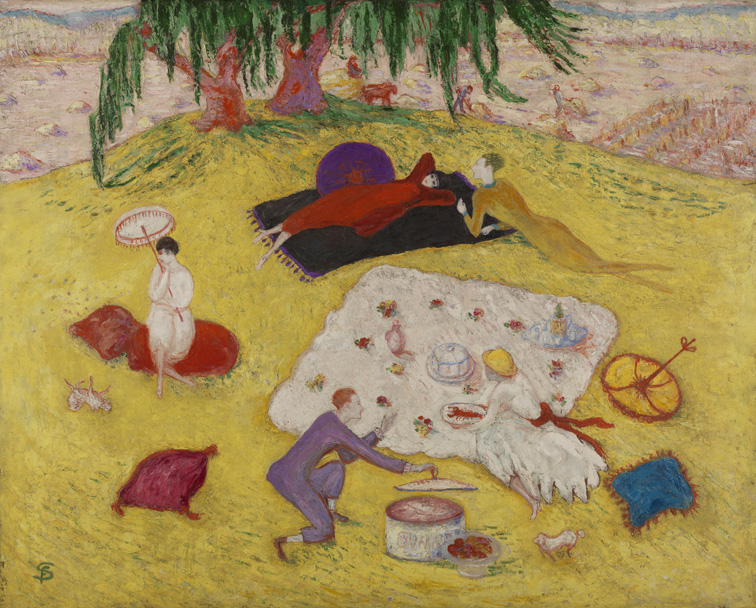
Florine Stettheimer, Picnic at Bedford Hills, 1918
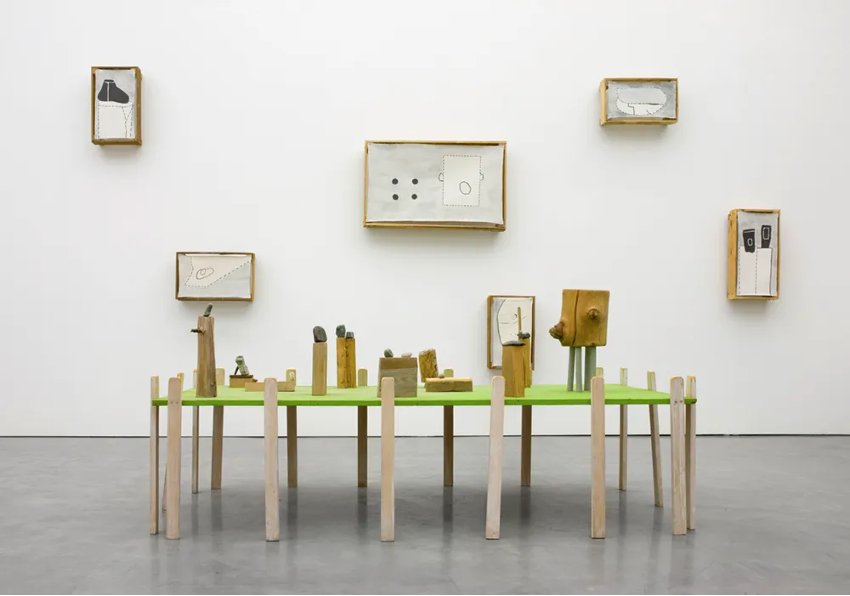
Ree Morton, Souvenir Piece, 1973 en la Generali Foundation, Viena, 2008
RESUMEN
Con el tiempo, el medio de representar el paisaje (imagen artística de la Naturaleza) y su concepto mismo han ido evolucionando hacia postulados cibernéticos que lo caracterizan como Tercer paisaje (Clément, 2018) o Medio ambiente. La imagen adopta la forma de ficción aumentada, híper-ficción o espacio cibernético, en el sentido de que cuenta con muchas capas de información codificada, calculada o simulada en lenguajes formales o artificiales y que es necesario decodificar más que interpretar. El camino hacia esta representación artística cibernética arroja innumerables casos o piezas clave. Nosotros hemos seleccionamos dos: el cuadro Picnic at Bedford Hills (1918) de Florine Stettheimer y la instalación Souvenir Piece (1973) de Ree Morton. Los recursos gráficos y conceptuales de ambas artistas, en estas y otras piezas sobre el tema de la naturaleza como lugar de ocio, generan lo que Fisher (2022) denomina “plusvalía de código”, es decir, una exteriorización visual del mensaje paisaje que requiere algo más que una decodificación simple, ya que no utilizan figuras lingüísticas convencionales como la metáfora, sino formas polinizadas con códigos dispares para crear variantes impredecibles –por ejemplo, cartográficas– del ready made (Lafer, 2015), la pintura rococó, el arte de compromiso social o la artesanía (Nochling, 2022).
PALABRAS CLAVE
Florine Stettheimer, Ree Morton, Paisaje, Semántica, Arte contemporáneo
ABSTRACT
Over time, the means of representing the landscape (artistic image of Nature) and its concept itself have evolved towards cybernetic postulates that characterize it as Third Landscape (Clément, 2018) or Environment. The image takes the form of augmented fiction, hyperfiction or cybernetic space, in the sense that it has many layers of information encoded, calculated, or simulated in formal or artificial languages and that it is necessary to decode rather than interpret. The path towards this cybernetic artistic representation yields countless cases or key pieces. We have selected two: the painting Picnic at Bedford Hills (1918) by Florine Stettheimer and the installation Souvenir Piece (1973) by Ree Morton. The graphic and conceptual resources of both artists generate what Fisher (2022) calls “code surplus value”, that is, a visual externalization of the “landscape” message that requires more than a simple decoding since they do not use conventional linguistic figures, such as metaphor, but rather enriched forms with disparate codes to create unpredictable variants – for example, cartographic – of ready-made (Lafer, 2015), Rococo painting, art of social commitment or crafts (Nochling, 2022).
KEYWORDS
Florine Stettheimer, Ree Morton, Landscape, Semantics, Contemporary art
Sigue leyendo
 Almudena Baeza